20 years of pioneer in xinjiang tourism for overseas travelers
Born Here, Know Best, Your Journey's Blessed
No Shopping. No Detour, 99% Excellent Review

contact UsOn Wechat

Explore Aksu with this comprehensive travel guide. Located in the central part of Xinjiang, Aksu is sandwiched between Urumqi up north and Kashgar down south, and at the southern foot of the Middle Tianshan Mountains and the northern edge of Tarim Basin. In the east, it is adjacent to Bayingolin Mongolian Autonomous Prefecture, and Ili Prefecture in the north.
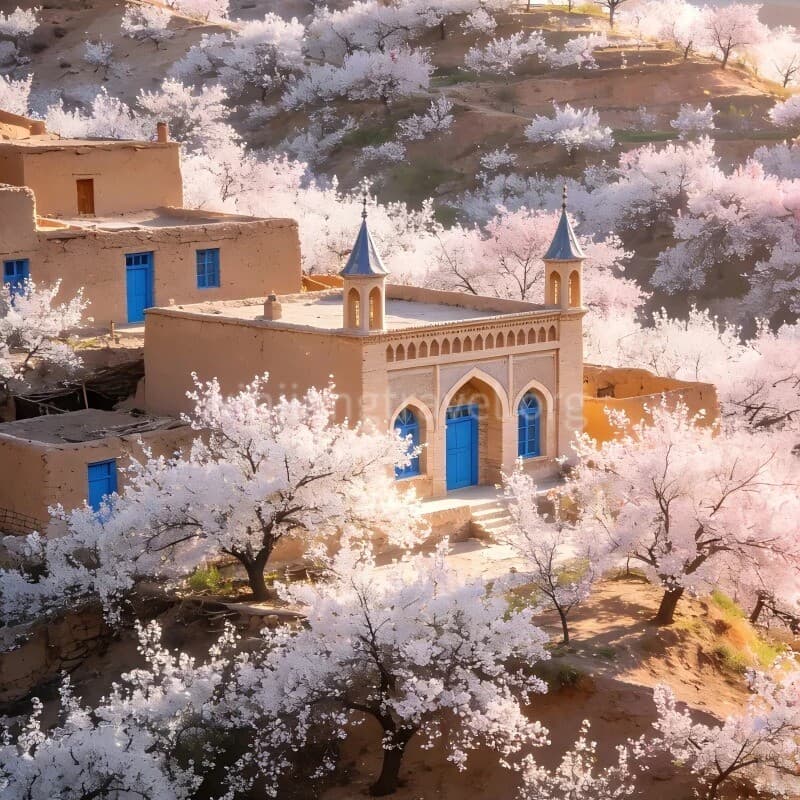
Aksu may be not famous, but when it comes to Kuqa's small white apricots and bingtangxin or honey heart apples, they are big names of Aksu's specialties with a juicy and sweet flavor that everyone knows.
Aksu has a warm temperate continental arid climate. Like most cities in Xinjiang, there is a large temperature difference between day and night. It rains little and has sufficient sunshine and heat resources. The weather is the reason why Aksu fruits are exceptionally sweet. Take a bite of the small white apricot! It will honestly tell you how happy you are when your mouth is full of apricot syrup.
May to October is the best time to visit Aksu, here is a chart for you to get information of Aksu seasonal temperature and guides in these months.
Tips: There is a large temperature difference between day and night. So be sure to pack a warm coat or jacket, as it will be useful in mountainous areas and at night. In summer, ultraviolet radiation is strong, so please bring a sun hat, sunglasses or sunscreen to protect your skin.
| Time | Average Temperature | Seasonal Guides |
| May and June | 13 ℃ to 29℃ (55°F to 84°F) | The grass turns green. Snow on mountains is not melted entirely. |
| July and August | 16℃ to 31℃ (60°F to 88°F) | Peak season Grass is the greenest. Fruits like small white apricots, peaches, watermelons, grapes are ripe. |
| September and October | 10℃ to 24℃ (50°F to 75°F) | Peak season Fruits like bingtangxin apples are ripe. Poplar forests turn golden. |
Marvelous Natural Scenery
The representative natural landscapes are ten sights: One Peak—Tomur Peak of Tianshan Mountains in Wensu County, One River—Tarim River, One Desert—the Taklamakan Desert, Two Lakes—the Grand and Small Dragon Pools in Kuqa City, One Mountain—Yanzi or Yanquan Mountain in Wushi County, One Hot Spring—Tiereke Hot Spring in Baicheng County, One Park—Tianshan Tree Park in Wensu County, One Forest—Populus Euphratica Forest in Shaya County, and Two Canyons—Tianshan Mysterious Grand Canyon in Kuqa City and Wensu County Grand Canyon (Tianshan Tomur Grand Canyon).
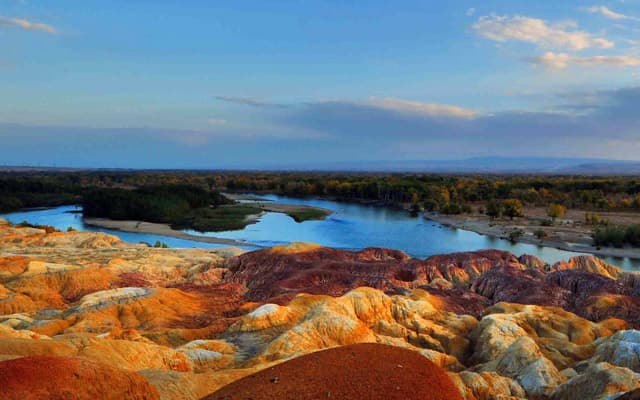
In Uyghur, "Aksu" means "white water". Due to the location at the south foot of Tianshan Mountains, melting snow brings a lot of water resources. Therefore, Aksu has large oases. The nearest National Wetland Park is an ideal place for walking, smelling flowers and listening to birds. Among rivers and deserts, large or small Yadan landforms in rusty red look spectacular.
As a crucial hub on the Ancient Silk Road, Aksu has been an essential place for the exchanges of Eastern and Western civilizations for more than 2,000 years. Diverse ethnic cultures coexist here harmoniously and form an indispensable part of Chinese culture. Its regional art, like folk songs and dances, is really charming. And its cultural relics and ancient sites witness its long history. They include the ruins of the ancient Kingdom of Qiuci—one of the 36 Western Regions Kingdoms, the renowned Kizil Thousand-Buddha Grottoes built in the period of the Eastern and Western Jin Dynasties, as well as famous ancient smelting sites, Islamic relics, Buddhist sites and more.
Aksu has many kinds of fruits, and the most representative two are bingtangxin or honey heart apples and Kuqa's small white apricots.
Bingtangxin apples are regarded as the "Queen of Apples", with sweet and fragrant flesh and a bright red, glossy appearance. You can tell by the name that they have an extremely high sugar content, and their core forms a crystal-clear "sugar heart" due to sugar accumulation. It is because Aksu has more than 2,800 hours of annual sunshine and a large temperature difference between day and night, which are ideal for sugar accumulation in apples. In addition, the fertile sandy soil provides sufficient nutrients for apple trees.
With a planting history of more than 2,000 years, Kuqa's small white apricots are one of the oldest apricot kinds in Xinjiang. They have thick flesh with a balanced sweet and sour taste, rich in fiber and vitamins. They boast a strong fragrance and turn golden yellow or orange-red when ripe. Here, apricot trees are grown in almost every household, forming a unique apricot culture. Products such as dried apricots and apricot jam are also very popular here.
About 60 kilometers north of the city lies the Kuqa Grand Canyon, surrounded by the Tianshan Mountains, known as one of the Top Ten Canyons in China. Mountains of the Grand Canyon are well arranged. Sometimes they are wide and sometimes narrow, making the impression of "a range viewed in face and peaks viewed from the side". In terms of color, most of the rocks in the canyon are either red or yellow. In particular, when the setting sun casts light on the canyon layer by layer, the fantastic shape and dreamlike color produce the gorgeous scenery of the Kuqa Grand Canyon.
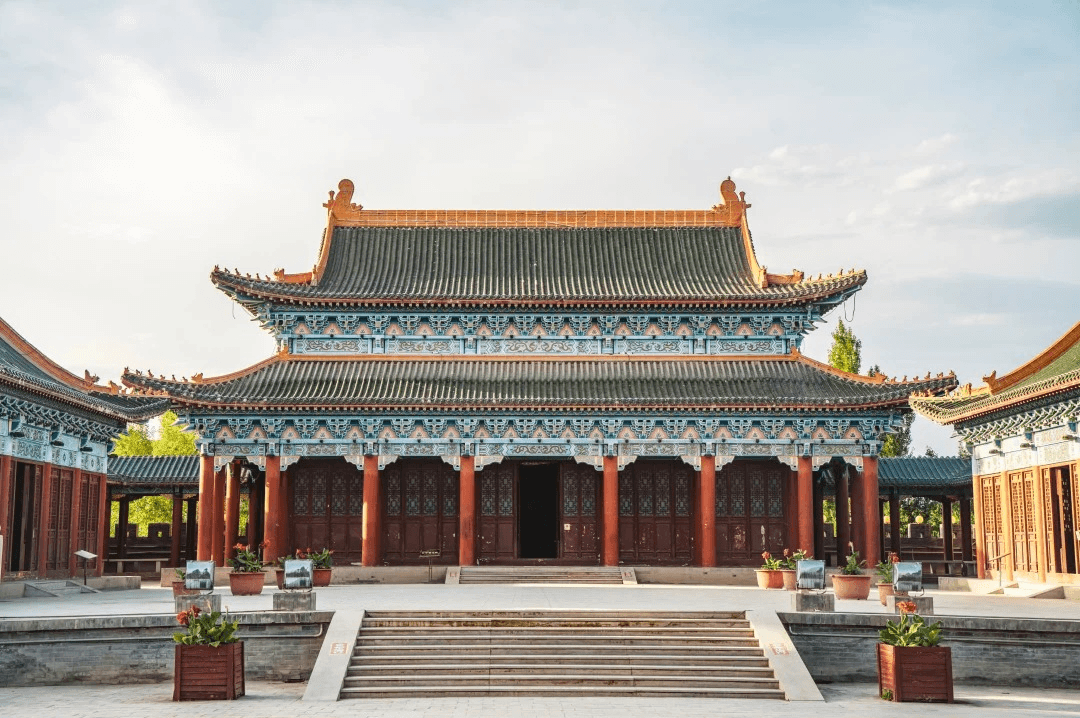
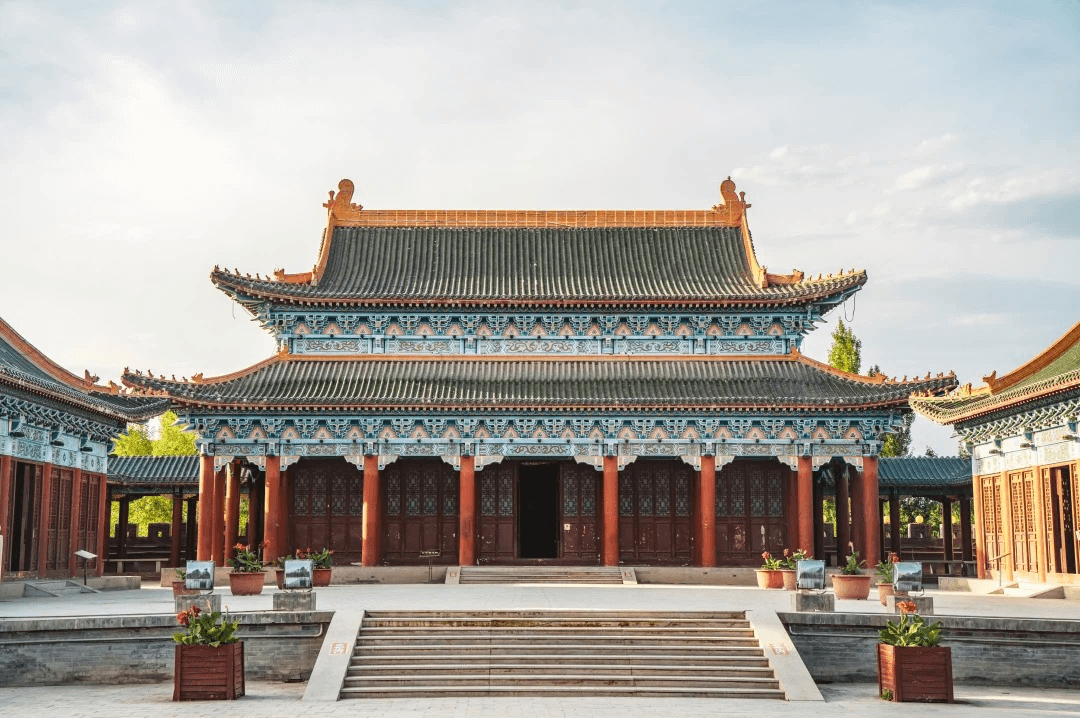
Stretching for several kilometers long, the Kizil Thousand-Buddha Grottoes are situated in Baicheng County, Aksu. At present, there are 236 grottoes. Among them, more than 80 caves are preserved with wall paintings occupying 10000 square meters. It was excavated in the 3rd century and gradually stopped in the 8th-9th century.
The murals in Kizil Grottoes can be regarded as the first appearance of Buddhism spreading to China and of the ancient Qiuci style. The most special feature of Kizil Grottoes is the diamond-shaped story painting; each diamond has a story. Some depict images of Sakyamuni Buddha, and others show various animals and so on. All of them are valuable.
The colors of the murals in the cave are all from natural pigments. White is from gypsum, and green from turquoise, black ones used to be dark red cinnabar, while blue ones from more expensive turquoise. It is said that they are all imported from Afghanistan and Pakistan.
Kuqa Mosque
Built in 1559, the mosque has a history of more than 460 years. As a symbol of religious diversity and ethnic integration, it has been listed as an important cultural heritage site in Kuqa City. It is the second-largest Mosque in Xinjiang, only 4km away from Kuqa new city. The grand Mosque is 18.3 meters high, all of which are made of traditional Uyghur green bricks. I am very fond of the green bricks because they look quite warm and inviting. The upright minaret is solemn. Inside, the pillars are carved in Islamic style. The carpets for disciples seem to tell Islamic creed. It must be said that the traditional Islamic turquoise matches very well with red, emphasizing the charm of Mosque.
By Flight:
Aksu has two airports, Aksu Hongqipo Airport and Kuqa Qiuci Airport. Aksu Hongqipo Airport is the main airport, having more flights and covering more cities. If you plan to visit downtown Aksu and surrounding attractions such as Kalajun Grassland and Tarim Poplar Forest, it should be your top choice. It is extremely close to the urban area—a taxi ride takes only about ten minutes, really convenient. If you are heading directly to Kuqa City, or the southern section of the Duku Highway, and other nearby spots, Kuqa Qiuci Airport is your top choice.
By Train:
There are several railway stations in Aksu. The top choice is Akesu Railway Station, which is only 5 to 10 km from the urban area. Public transport and taxis are accessible, and it has various options for accommodation, dining, car rentals, and shuttle buses to surrounding counties. It is the most convenient starting point for traveling elsewhere in the region.
By Bus:
Aksu has many buses, enough for getting around the city. But for places far away, you’d better take a taxi or a private car.
By Car:
Aksu has plenty of taxis and ride-hailing cars. They are affordable and well-regulated, perfect for short trips in the city. For long-distance travel, renting a car is the best way to get around. Car rental services are also available on our website. For more details, please see Xinjiang Car Rental.
Aksu offers a wide range of accommodation, including luxury hotels, business hotels and distinctive homestays. You can choose according to your needs.

Kashgar - Taxkorgan county (Pamir Plateau) - Kuqa - Turpan - Urumqi
Southern Xinjiang Memorable Tour starts from the famous Kashgar which is the culture center of Uighur people. Take the train to Kuqa with the sightseeing of the vast desert. Discover the fireland of Turpan. We bring you a different Xinjiang Travel Experience.

Urumqi - Turpan - Korler - Kuqa - Hotan - Yarkent - Kashgar
Southern Xinjiang and Taklamkan Desert highway Adventure starts from Urumqi, drive through the Taklamakan Desert to Kashgar which is the west most city of China. We will also visit Turpan, Korler, Kuqa and Hotan. Travel with locals enjoy excellent service.
Urumqi-Tianchi-Korla-Kuqa-Aksu-Kashgar-Taxkorgan-Kashgar-Urumqi
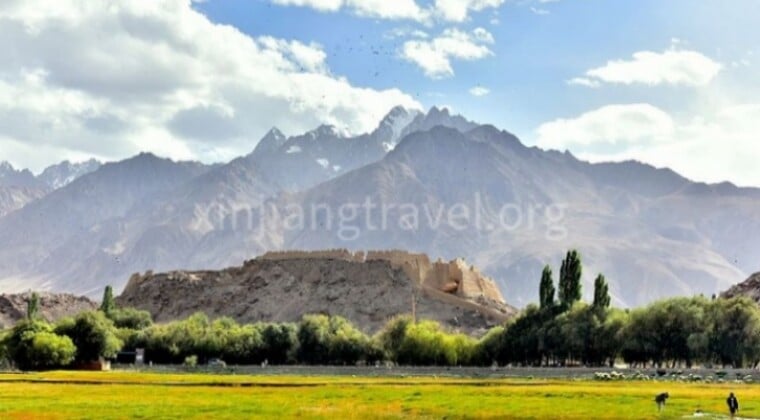
Embark on this 10-day Southern Xinjiang & Pamir Plateau journey, tracing the ancient Silk Road from Urumqi to Kashgar. Marvel at turquoise Heavenly Lake (Tianchi), the red sandstone wonders of Kuqa Grand Canyon, and the ancient Buddhist murals at Kizil Thousand Buddha Caves. Drive along the breathtaking Karakoram Highway, gaze at Muztag Ata Peak reflected in Karakul Lake, and explore the living heritage of Kashgar Old City and Id Kah Mosque. With private transport, expert English-speaking guides, 4-5 star hotels, and most meals included, this tour offers an unforgettable blend of nature, culture, and history.